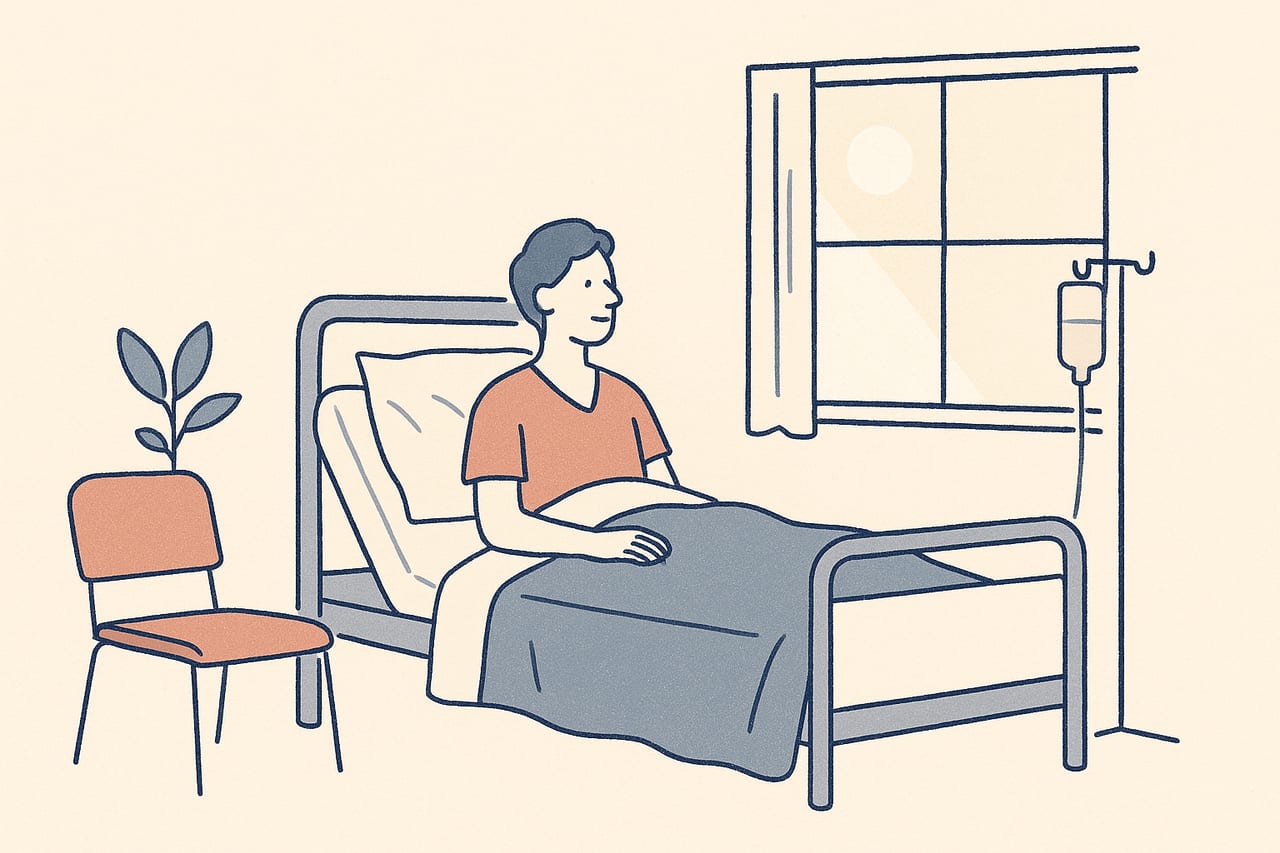
A hospitalization, an emergency surgery, or a serious diagnosis can leave the same kind of imprint as any other traumatic event — intrusive memories of the ICU, dread before a follow-up scan, flashbacks to a procedure. Here's what a recent systematic review found about using EMDR for this kind of medical trauma, and where the evidence still falls short.
Why medical events can function as trauma
Not every difficult medical experience leaves lasting psychological symptoms, but some clearly do. A client who went through an unexpected ICU admission, an emergency surgery, or a frightening diagnosis can develop the same re-experiencing, avoidance, and hyperarousal pattern associated with other traumatic events — sometimes centered on a specific moment (a code blue, waking up intubated, hearing the diagnosis spoken aloud) that functions exactly like a single-incident trauma memory. That’s the rationale for applying EMDR here: a concrete, identifiable moment is exactly what EMDR’s memory-reprocessing approach is built to target. For background on how EMDR works with any target memory, see what EMDR therapy is.
Whether a gradual medical experience — a slow cancer diagnosis, a chronic illness — qualifies the same way is a more debated question. Conditions that unfold gradually rather than in a single frightening moment don’t always fit the index-trauma model as cleanly, which matters when you’re deciding whether EMDR or another approach is the better first move.
What the evidence shows
A 2024 systematic review in the European Journal of Psychotraumatology, following PRISMA guidelines, examined how EMDR is used and how well it works across medical settings, specifically excluding patients whose only issue was a mental health disorder with no physical illness. The review covered 87 studies across 14 medical domains and found that EMDR reduced symptoms in 85 of the 87 — with the strongest evidence concentrated in oncology, pain, and neurology. Adverse events were rarely reported. The authors were candid about quality, though: the included studies carried at least a moderate to high risk of bias, and outcomes were too heterogeneous to pool into a single effect size (Driessen, Morsink, Busschbach, Hoogendijk, & Kranenburg, 2024).
A smaller, earlier pilot study gives a concrete example from oncology specifically: 18 cancer patients across stages I–III received 12 EMDR sessions, with symptoms assessed at baseline, session 6, and session 12. The group showed remission of PTSD symptomatology — reduced re-experiencing, avoidance, and hyperarousal — along with improvements across several secondary measures. The authors described the findings as exploratory given the small sample and the lack of a control group (Civilotti et al., 2014, Psycho-Oncology).
A high volume of positive results, read carefully
"85 of 87 studies showed improvement" sounds like a strong endorsement, but it's a count of mostly small, uncontrolled studies with elevated risk of bias — not 87 well-controlled trials replicating the same finding. Treat this as a genuinely encouraging signal across a large and varied literature, not as settled, high-grade evidence.
Using this evidence in practice
A few things follow from where the research actually sits:
- Oncology, pain, and neurology have the deepest literature. If your client’s medical trauma falls in one of those areas, you have more precedent to draw on than for less-studied medical specialties.
- Target the moment, not the diagnosis. A specific, identifiable memory — a particular conversation, a procedure, a moment of fear in the ICU — is a clearer EMDR target than a diffuse sense of “having cancer” or “being sick.” If a client’s distress doesn’t resolve to a specific moment, a different primary approach may fit better, with EMDR used alongside it.
- Coordinate with the client’s medical team when the condition is ongoing. Unlike a single past incident, an active or recurring medical condition means the “trauma” may still be unfolding — follow-up scans, ongoing treatment, new symptoms. That changes pacing and timing decisions in ways a single-incident case doesn’t require.
- Watch for pain-specific considerations. If chronic pain is part of the clinical picture, our review of the EMDR-and-pain evidence covers that overlapping literature in more depth.
This isn't a protocol
This article summarizes published research; it isn't clinical guidance and doesn't replace your training, supervision, or coordination with a client's medical providers. Given the overlap between psychological and physical symptoms in this population, lean on consultation for complex cases.
Questions worth asking before you start
A short intake conversation focused on the following tends to clarify whether EMDR is a good fit for a given medical-trauma presentation:
- Is there a specific moment, or a diffuse ongoing experience? A client who can describe a particular point — the moment a monitor alarm went off, a specific sentence from a doctor, waking up from anesthesia disoriented — gives EMDR a concrete target. A client whose distress is more about an ongoing, unresolved medical situation may need a different primary approach, at least until a stable target emerges.
- Is the medical situation resolved or ongoing? Reprocessing a memory from a hospitalization that’s fully in the past is a different task than working with a client who is still mid-treatment, still awaiting results, or facing a recurring condition. The latter calls for closer coordination with pacing and timing than a single past incident does.
- Does the client’s medical team know trauma-focused therapy is part of their care? This isn’t always necessary, but for clients in active treatment, especially oncology or any condition with ongoing monitoring, looping in the medical team avoids working at cross purposes with their broader care plan.
- Are there somatic triggers tied to the medical setting itself? Clients with medical trauma sometimes have strong physiological reactions to clinical environments, equipment sounds, or even certain smells. Flagging these in advance helps you anticipate activation that isn’t obviously about the processing itself.
Overlap with other presentations
Medical trauma often arrives bundled with other presentations covered elsewhere on this site — [birth-related medical trauma](/blog/emdr-birth-trauma-perinatal-loss), chronic pain following an injury or surgery, or an evidence-thin area like [EMDR for eating disorders](/blog/emdr-eating-disorders-evidence), where medical risk also shapes how carefully you proceed. Treat this article as background on the medical-setting literature specifically, and draw on those more targeted pieces when a client's presentation overlaps with one of them.
Running sessions remotely with medical-trauma clients
Clients recovering from a hospitalization or ongoing medical treatment often have real practical reasons to prefer remote sessions — fatigue, mobility limits, immunocompromised status, or simply not wanting to add a commute on top of an already demanding treatment schedule. The mechanics are the same as any other CloudEMDR session: a moving dot or other bilateral stimulation on screen, run over whatever video platform you and the client already use.
Try the moving dot with your next session
CloudEMDR gives you the moving dot, bilateral sound, and speed and pattern controls in your browser — no software to install. Pro adds a distraction-free client link and a session timer, with the first three weeks free.